



The Financial Analyst, Willy Ontsia, Denounces Bloomberg's Erroneous Projections
Interview and critical analysis of the economist Willy Ontsia regarding the Bloomberg report which depicts Gabon as being on the verge of bankruptcy.
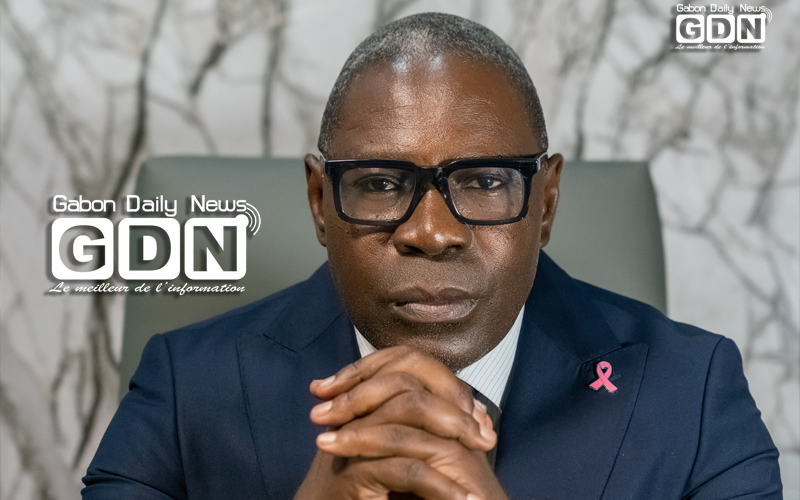
A recent report by the Bloomberg agency has sent a shockwave by describing Gabon as a state "on the verge of bankruptcy." What is your opinion on this claim by Bloomberg ?

This alarmist analysis, based on particularly negative economic projections, was quickly and firmly refuted by the Gabonese government. The latter responded with precise communication, supported by rigorous data, demonstrating the bias and inaccuracy of the diagnosis made by Bloomberg.
What arguments underpin the critical analysis of Bloomberg's projections ? Bloomberg essentially based its report on a mistaken interpretation of Gabon's macroeconomic indicators, particularly regarding indebtedness and the budget deficit. Bloomberg notably relied on a supposed excess of public debt but omitted taking into account the financial and budgetary reforms as well as the rigorous management framework established after the "coup de libération" of August 30, 2023.
What is your analysis on this subject? Since that date, the State has consolidated its financial and budgetary governance, which is reflected in strict control over budget deficits and a continuous improvement in tax revenues. The Bloomberg agency ignored several essential structural characteristics of Gabon, notably the virtuous process of economic transformation, combining a reduction in dependence on raw materials, optimization of own revenues, and strengthening of infrastructure.
What key figures confirm Gabon's resilience? According to the Ministry of Economy, the debt-to-GDP ratio has remained stable at around 70%, a perfectly sustainable level that complies with international recommendations. Furthermore, the average annual economic growth over the last five years fluctuates between 2.5% and 3%, driven by a gradual recovery in oil prices and diversification into non-oil sectors. The budget deficit, far from the 10% predicted by Bloomberg, is controlled at less than 3%, thanks to strict fiscal discipline and an increase in non-oil revenues. In addition, foreign exchange reserves are maintained at nearly 4 months of imports, guaranteeing monetary stability and the confidence of foreign investors.
What are the structural reforms and future prospects? The Gabonese government has implemented deep, systemic reforms to improve the business climate, optimize the collection and centralization of public revenues, develop in situ production chains, strengthen the State's economic sovereignty with strategic acquisitions, and consolidate ethics and transparency in the management of public finances. These measures recently earned Gabon a better rating in the World Bank and Doing Business rankings, further contrasting with Bloomberg's pessimistic view. Finally, the acceleration of investments in the energy sector and the development of the construction and public works (BTP) sector testify to a real and sustainable economic dynamic. Numerous structuring projects are being implemented, and initiatives in modern agriculture are subject to supporting balanced development and reducing vulnerability to external shocks.

What is the impact of this Bloomberg report on the Gabonese economy? Bloomberg's report, by ignoring the economic fundamentals and structural reforms undertaken, proves to be not only erroneous but potentially harmful to Gabon's economic reputation. The government's response, based on transparent data and undeniable facts, puts this alarmist analysis back into perspective and demonstrates that Gabon is far from being "on the brink of bankruptcy" because, as of the 2025 financial year, the country has already reimbursed more than 1000 billion FCFA of 2025 debt and is not accumulating insurmountable arrears.
On the contrary, the country is implementing a responsible economic policy, guaranteeing robust stability and solid prospects for the years to come.