



The 10 largest economies in Africa in 2026: hierarchy, method, and structural strengths
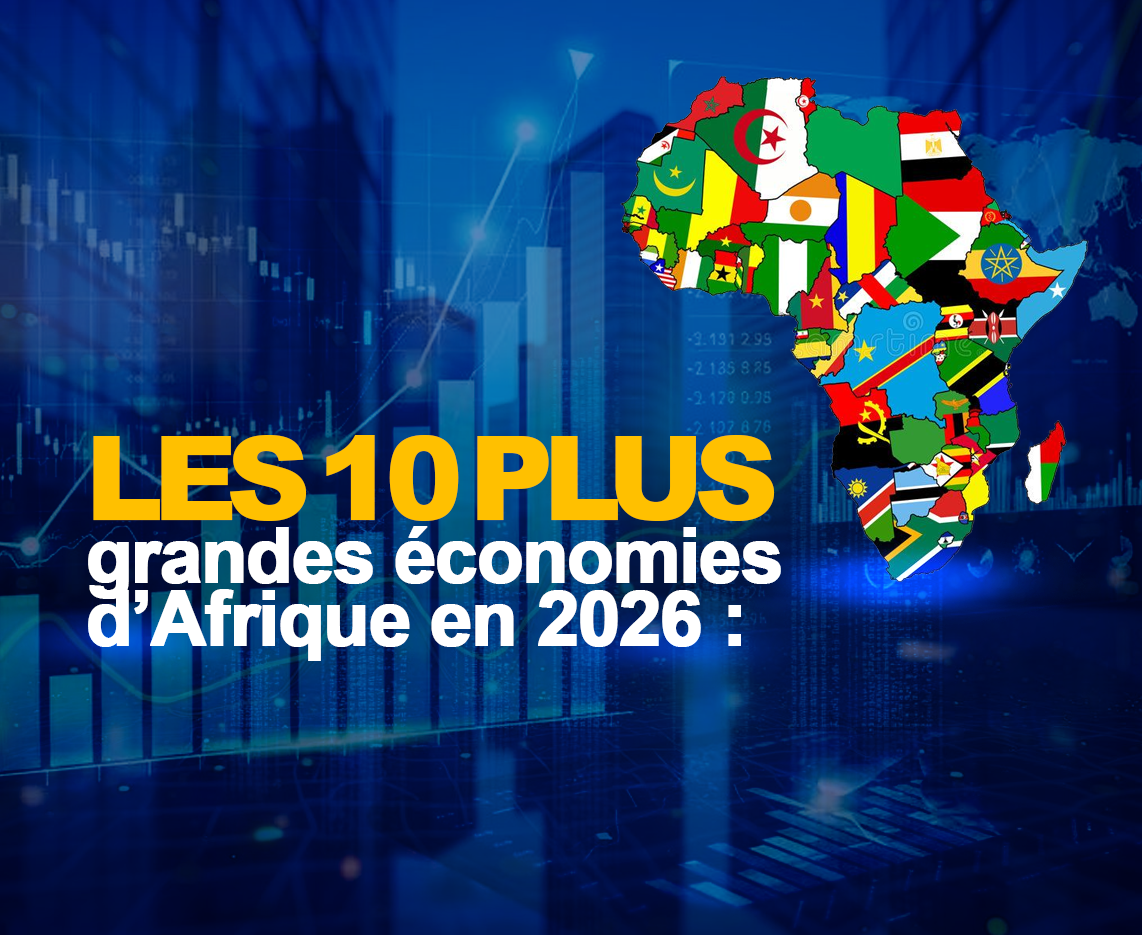
The 2026 ranking of the largest African economies, based on projected nominal GDP in current dollars by the IMF, confirms the dominance of South Africa, Egypt, Nigeria, Algeria, Morocco, and the emergence of Kenya among the drivers
I n this hierarchy, Côte d'Ivoire remains, along with Ghana, the only representative of the CFA franc zone in the top 10, which highlights the concentration of Africa's economic centers of gravity outside this monetary zone.

Evaluation Method This ranking is based on nominal GDP, that is, the value of economic output expressed in current dollars, and not GDP at purchasing power parity or the level of real growth. This approach measures the market size and the macroeconomic weight of a country in the continental economy, but it remains sensitive to exchange rate fluctuations, inflation, and external shocks. The projections used here are based on the estimates published around the IMF's 2026 outlook and reported by several economic sources.
The top 10 in 2026: South Africa, Egypt, Nigeria, Algeria, Morocco, Kenya, Ethiopia, Ghana, Ivory Coast, and Angola. Strengths of the major economies South Africa maintains a deep productive base, supported by finance, mining, services, and infrastructure more advanced than the continental average. Egypt benefits from a large consumer market, a dense infrastructure network, and a strategic position between the Mediterranean, Africa, and the Middle East.
Nigeria, despite macroeconomic imbalances, remains a demographic and commercial giant whose market size carries significant weight in IMF projections. Algeria and Morocco illustrate two different models of medium power: Algeria relies more on energy rents and macro-financial balances, while Morocco relies on industrialization, exports, logistics, and integration into Euro-Mediterranean value chains. Kenya, for its part, establishes itself as a services and innovation economy, with a rise in finance, digital technology, and regional activities in Nairobi.
CFA franc zone The striking feature of this ranking is the almost complete absence of the CFA franc zone from the top 10: only Côte d’Ivoire is included, while significant economies such as Senegal, Cameroon, or Burkina Faso remain outside the top ten. This reflects both the concentration of added value in a few large non-CFA economies and the difficulty for several countries in the zone to reach a sufficient level of diversification and industrialization.
Economic reading This ranking should be read as a snapshot of nominal power, not as a complete record of development. A country can have a higher GDP without showing faster growth, nor higher per capita income, nor better external resilience. Conversely, economies like Kenya or Côte d’Ivoire gain visibility because they combine reforms, diversification, and upgrading in productive capacity.