



Kim Oun Exposes Embezzlement Network Orchestrated by Sylvia and Noureddin Bongo Valentin
Trial Noureddin and Sylvia Bongo Valentin: Kin Oun, the former jack-of-all-trades for the Ali Bongo Clan, confesses before the Criminal Court of Justice.
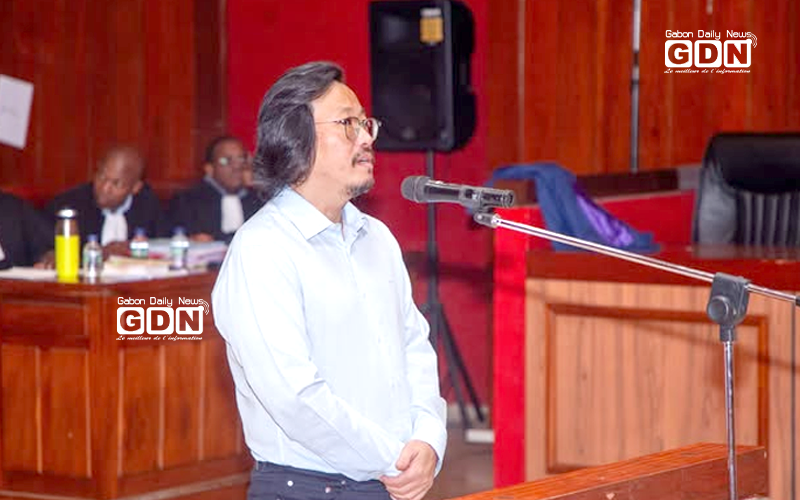
T his Tuesday, October 11, 2025, at the Libreville courthouse, Kim Oun, the presidential couple's former close associate, provided unprecedented insight into the judicial case by revealing the parallel financial mechanisms orchestrated by Sylvia and Noureddin Bongo Valentin. His testimony highlights a compartmentalized and hierarchical organization that bypassed institutional channels to manage a massive campaign budget estimated at 80 billion CFA francs ($128 million USD).

Kim Oun specifies that he was exclusively in charge of assisting Sylvia Bongo, separate from Noureddin, while Abdoul Oceni Ossa, who became Noureddin Bongo Valentin’s right-hand man, controlled his private and administrative affairs. This duo thus managed the essential levers of presidential power behind the scenes, outside of official structures.
The August 2023 presidential campaign relied on a strict division of responsibilities:
• Alex Bongo and Abdoul Oceni Ossa supervised financial operations. • Jessye Ella Ekogha spearheaded communication. • Ian Ngoulou and Steve Nzeko Dieko handled political strategy. • Marion Scappaticci provided overall coordination, acting as the direct link between Sylvia and Noureddin.
Kim Oun explains that major budgetary decisions were made exclusively by Sylvia and Noureddin without any external oversight. Specifically, he supervised the purchase of 100 vehicles and the logistics for importing campaign materials, as well as negotiating helicopters with Airbus, all under Noureddin's strict direction.
The clandestine financial system relied on a sophisticated mechanism: after receiving liquid funds from the Paymaster General (Trésorier payeur général), Kim Oun injected them into informal currency exchange networks (the "black market") in Libreville. These funds were then transferred to Dubai, where lawyer Alain Malek, a key figure in the financial scheme, placed them into offshore accounts (Royal Capital, Noor Capital). These accounts were used to cover Sylvia Bongo’s luxurious expenses, whose annual cost of living amounted to 3 to 4 million euros in jewelry, artwork, and designer clothing.

Kim Oun insists on the separation of roles: he never managed Noureddin’s funds or participated in confidential strategic meetings between Sylvia and Alain Malek, but he did, however, manage the administrative and financial logistics directly for Sylvia.
This testimony confirms the existence of a system parallel to the official government, where financial and political management was concentrated within the Bongo clan, fueling strong suspicions of massive embezzlement of public funds and money laundering. These revelations strengthen the charges in the current trial in absentia against Sylvia and Noureddin Bongo Valentin in Libreville.