


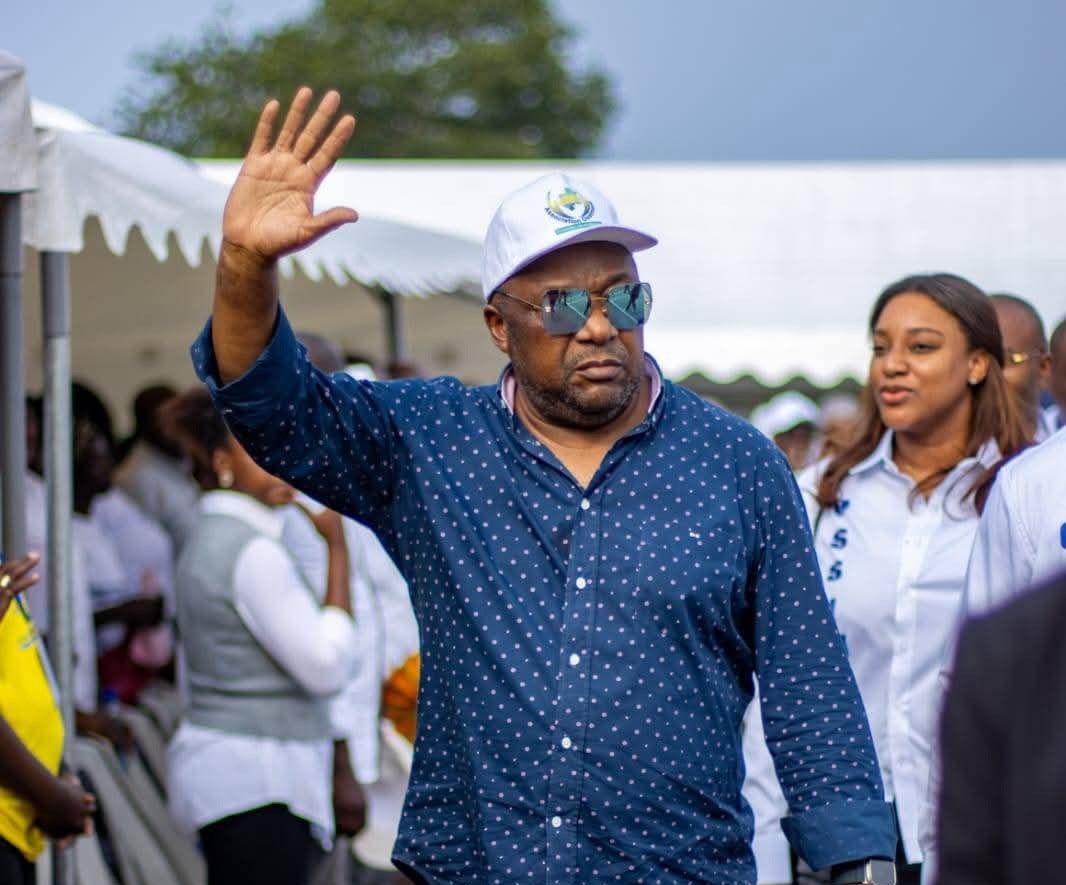
Léandre Nzue ousted from his position on the city council.
The former PDG mayor who became president of the UDB group at the Libreville city council has been removed from his post.
T he recent reshuffle at the head of the Libreville city hall, marked by the appointment of Eugène Mba to replace Pierre Obame Etoughe, was supposed to embody a new momentum of stability and cohesion.

Yet, the events that followed reveal a reality far less reassuring within the Union for Democracy and Progress (UDB). Indeed, the ousting of Léandre Nzue from the presidency of the UDB group at the City Council—despite him being an experienced figure and a former pillar of the municipal system under Ali Bongo—highlights the persistent tensions undermining the party. This decision, officially justified by a concern for unity, appears more like the symptom of a deep-seated malaise than a lasting solution.
The UDB, a heterogeneous political formation born in the context of transition, brings together former executives of the ousted PDG, figures from the historical opposition, as well as civil society actors recently engaged in politics. This diversity, far from constituting a fully exploited asset, is progressively transforming into a source of rivalry and strategic disagreement. Between personal ambitions, ideological divergences, and power struggles, a true cacophony seems to be setting in, weakening local governance and blurring the clarity of the party's political action. The rapid succession of internal decisions, often perceived as abrupt or opaque, fuels frustration rather than cohesion.
In this context, the appointment of the new mayor appears almost relegated to the background, eclipsed by the internal quarrels of a party that is still struggling to define a clear line and uncontested leadership. If the UDB fails to overcome these structural tensions, it risks compromising not only its political effectiveness but also the trust of the citizens it claims to represent.