


Ghost Fleet: Gabon Reclaims Control of Its Flag
For years, Gabon's name drifted offshore, used by Russian-linked vessels to bypass international sanctions. According to European reports, a dozen tankers registered under the Gabonese flag delivered cargoes despite prohibitions, exploiting an often outsourced and opaque registry. Brussels sounded the alarm: Gabon risked being blacklisted and losing all maritime credibility.
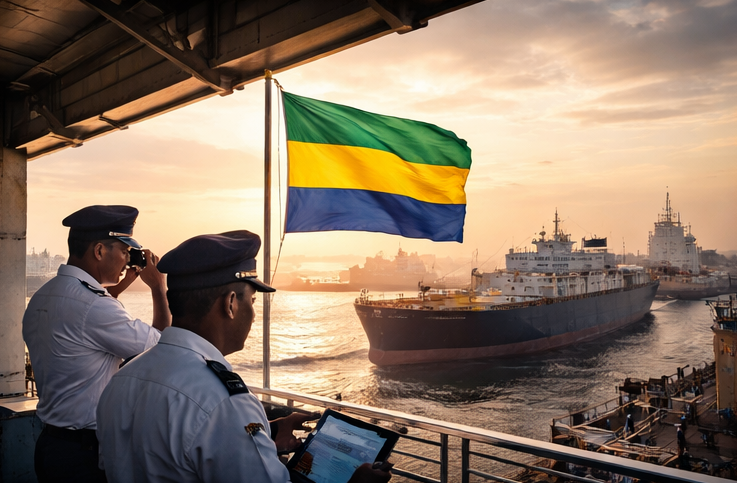
T he reaction from Libreville was swift and radical. Since January 2026, a comprehensive audit of registered vessels has been underway. Every shipowner must reveal the true identity of the proprietors and provide a precise history of commercial activities. Vessels failing to meet these criteria are immediately de-registered. Of the 120 ships registered at the end of 2025, 18 have already been suspended for non-compliance.

However, the measure goes beyond mere numbers. State services have been bolstered: maritime inspectors, AIS tracking systems, and financial databases are now mobilized to ensure total traceability. Coordination with the International Maritime Organization and regional partners ensures that every ship flying the Gabonese flag is visible and compliant with international standards.
This reclamation of control requires a delicate balance. Excessive rigor could reduce the attractiveness of the flag, historically chosen for its flexibility. But for the government, the cost is justified: restoring national integrity, protecting the local economy, and securing Gabon’s international image.
Behind the technicalities and regulations lies a clear message of sovereignty: the Gabonese flag is no longer a mere administrative banner. It is now an instrument of control and credibility, capable of saying no to misappropriation and manipulation. For Libreville, this "purge" is not a symbolic act: it is a demonstration that a small African state can impose its law over its waters and its name, even in the face of pressure from global powers.