



Flooding in Gabon: Vice President Convenes Interministerial Meeting
In the face of torrential rains, Vice President Hermann Immongault coordinates an interministerial response to secure the populations of Greater Libreville.
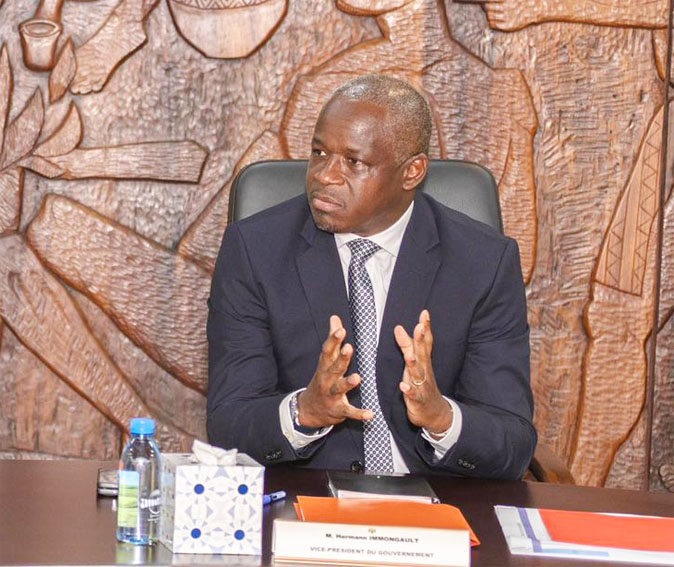
M eeting in an emergency session on January 28, 2026, the Gabonese executive launched a vast operation for damage mapping and urban rehabilitation. This mobilization aims to provide an immediate humanitarian response while structuring sustainable solutions for national sanitation.

A Crisis Cell Under High Instruction : Under clear directives from the Head of State, the Vice President of the Government, Hermann Immongault, brought together key ministerial departments this Wednesday, January 28, 2026. The primary objective of this administrative conclave is to establish a diagnosis of surgical precision regarding the extent of the damage caused by recent torrential rains. The goal is to accurately census affected families, damaged homes, and impacted businesses. This statistical rigor is the indispensable prerequisite for adjusting the strength of the state response to social distress.
A Multisectoral Presence on the Ground : From the very first hours following the alert, sectoral ministries were deployed to the heart of critical zones in Greater Libreville. The Minister of Public Works, Edgard Moukoumbi, highlighted that the occupation of non-buildable zones and the obstruction of engineering structures by debris exacerbated the rising waters. This immediate government presence allows for the assessment of the logistical and financial needs required for rapid intervention. The strategy relies on absolute reactivity to prevent any additional health or security risks for exposed residents.
Toward Resilient Urban Planning : Beyond the humanitarian emergency, the Gabonese government is engaging in deep reflection on the restructuring of the urban landscape. Current discussions aim to validate a very short-term action plan while integrating lasting technical solutions. By tackling the structural causes of unsanitary conditions and flooding, the State aims to strengthen the resilience of national infrastructure. This transformative vision, focused on rigorous planning, demonstrates the authorities' will to durably protect citizens against increasingly intense climate hazards.
The interministerial meeting of January 28, 2026, marks a turning point in the management of natural disasters in Gabon. By combining social compassion with technical expertise, the government is not merely treating symptoms but is outlining the contours of a modern, secure city resolutely focused on the future.