



Gabon Suffers Setback at ECCAS: Postponement of General Yves-Marcel Mapangou’s Candidacy for Commissioner for Political Affairs
A notable decline of Gabonese diplomacy on the sub-regional stage, threatening the traditional leadership and the role of arbiter that Gabon once claimed to embody.
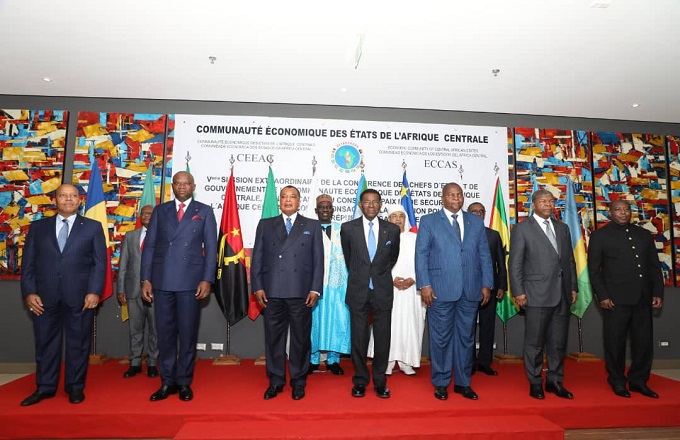
" On January 16, the Council of Ministers met in preparation for the 9th Extraordinary Session of the ECCAS Heads of State, dedicated to the appointment of new commissioners and other officials for this sub-regional institution. These provisional selections must be ratified by the Conference of Heads of State. For the second time, Gabon faces the risk of being excluded from the ECCAS Directorate, despite its headquarters being located in Libreville, Gabon. Competing against the candidate from the Central African Republic (CAR)—who is favored by the recruitment firm and a portion of the ECCAS members—the Gabonese candidacy will be submitted once again during the extraordinary session of the Heads of State, scheduled to take place this week via videoconference.

During the ECCAS Council of Ministers held this January 16, it emerged with bitterness that the Gabonese delegation suffered a major diplomatic setback within the Economic Community of Central African States (ECCAS). The members failed to validate Gabon’s nominee for the position of Commissioner for Political Affairs, General Yves-Marcel Mapangou,
The 8th Extraordinary Session of the Conference of Heads of State and Government, held on September 7, 2025, in Malabo, had already postponed the appointment of new commission members due to grievances from member states. Despite an additional 45-day extension granted to the recruitment firm, the final appointment process—scheduled during the preparatory Council of Ministers on January 16, 2026—now reveals the extent of Gabon's strategic weaknesses.
The initial principle put forward prioritized the representation of states that had been excluded from the first commission—an ideal opportunity for Gabon. Indeed, our country was not represented during this first mandate. This context offered a major window of influence. Unfortunately, political reality eclipsed this rule, plunging the allocation of posts into a game of alliances, negotiations, and political maneuvering, where Gabon proved unable to navigate effectively.
Gabon has indeed clung rigidly to the position of Commissioner for Political Affairs, Peace, and Security—a major strategic pillar within ECCAS. This exclusive choice to install General Yves-Marcel Mapangou, a candidate notoriously ill-reputed and poorly rated among other member states, demonstrates a dangerous diplomatic myopia. Far from negotiating or exploring other positions of responsibility, Gabon locked itself into an illusory strategy, subject to personal lobbying that proved insufficient to carry weight in the regional compromise.
The Council of Ministers finally concluded late into the night on January 17 without any decisive progress for Gabon, leaving the current chairmanship to decide this weekend between the Central African Republic and Gabon for the key position. The final distribution reveals Gabon left in suspense over the Commissioner for Political Affairs post, while countries such as Chad, Angola, Congo, the DRC, Cameroon, and São Tomé and Príncipe positioned themselves with pragmatism and cunning, securing essential departments: Vice-Presidency, Common Market, Department of Land Affairs and Infrastructure (DATI), Environment, Human Development, Gender and Education, and the Legal Counsel position. Paradoxically, it should be noted that the only senior position Gabon retains within ECCAS is that of Financial Controller, whose mandate ends in two years. This highlights a blatant deficit of influence, reinforced by an unadaptable diplomacy that cruelly lacks global vision and political flexibility. By refusing to diversify its approach and obsessing over a single, ill-founded case, Gabonese diplomacy has sacrificed its future within an indispensable regional institution.

While several member states are building solid alliances and multiplying their institutional footholds, Gabon has demonstrated a rigid strategy, disconnected from regional political realities. This lack of agility marks a notable retreat on the sub-regional stage, threatening the traditional leadership and the role of arbiter that Gabon once claimed to embody. The Conference of Heads of State and Government, expected to meet via videoconference this week to adjudicate the provisional results, will be a new test. It remains to be hoped that a final diplomatic surge might change the outcome. Otherwise, this political sequence represents a blunt warning of the urgent need for Gabonese diplomacy to reinvent itself, adopt strategic flexibility, and develop a truly effective diplomacy of influence to preserve its major interests within ECCAS.
In conclusion, Gabon’s rigidity and obstinacy in the race for ECCAS positions have exposed the flaws of a diplomacy that is overly dependent on personal interests and insufficiently pragmatic. Faced with better-prepared and more flexible actors, Gabon risks being relegated to the sidelines, gradually losing control over the regional levers of influence that once defined its strength. This setback calls for an urgent reassessment of strategies, the modernization of influence networks, and an openness to broader, more effective alliances at the heart of ECCAS.