



A Bloated Government of 30 Ministers Amidst a Public Debt Crisis: When Politics Trumps Socio-Economic Common Sense.
The multiplication of ministerial portfolios will significantly inflate public spending.
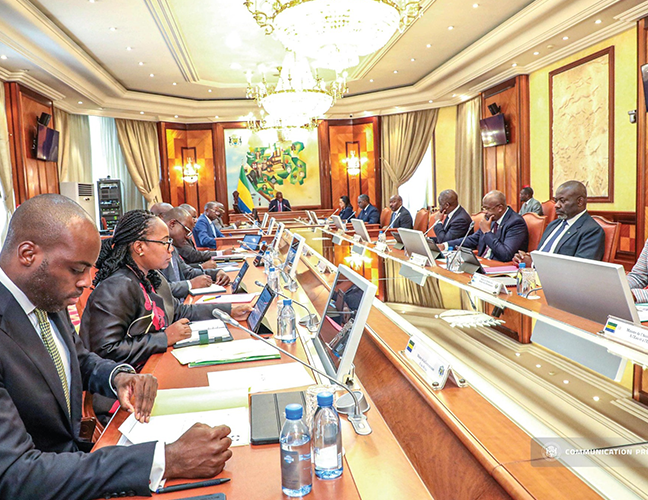
T his Thursday, January 1, 2026, the Secretary General of the Presidency of the Republic solemnly unveiled the composition of a new Gabonese government consisting of 30 ministers. This decision, fraught with consequences, has sparked a wave of confusion and sharp criticism among an exhausted Gabonese population, which is urgently calling for better control over the State's operating costs.

A bloated government of 30 ministers in the midst of a public debt crisis is a blatant absurdity and a worrying admission of irresponsability. While public resources should be rigorously optimized to meet the essential needs of the population, the State chooses instead to multiply ministerial portfolios, artificially inflating expenditures. This bureaucratic inflation is not a solution, but a hindrance to Gabon's economic vitality.
The financial consequences are colossal. Each minister brings with them an army of staff, advisors, drivers, and ancillary costs (official vehicles, travel expenses, allowances, and logistics). The payroll burden is exploding even as the budget deficit continues to widen. This bloated government swallows tens of billions of CFA francs that could have been prioritized for investment in education, healthcare, infrastructure, or economic recovery.
Furthermore, this proliferation of ministries creates institutional confusion. Overlapping jurisdictions, the multiplication of egos, and internal power struggles slow down decision-making and dilute accountability. The result? An inefficient state apparatus, fragmented actions, and a clear loss of political direction.
At a time when state modernization calls for rationalization, the reduction of unnecessary spending, and administrative fluidity, what we are witnessing here is a step backward, far from good governance practices. This bloated government appears more like a political tool designed to satisfy partisan constituencies than a genuine commitment to improving the living conditions of the Gabonese people.
The cynicism of this approach is all the more glaring as the social divide continues to widen, unemployment rises, and poverty affects a large portion of the population. The message being sent is clear: the Gabonese political class is retreating into the comfort of its privileges, while the average citizen bears the brunt of a wasteful and budget-consuming administration.

Faced with this affront, civil society and public opinion are demanding more than just a ministerial facelift. They are calling for genuine structural reform, a drastic reduction in operating expenses, greater transparency, and above all, a public administration that serves the Gabonese people rather than a political elite detached from reality.
It is imperative that the leadership realizes that Gabon's future will not be built on a bloated and budget-consuming government, but on a lean, competent team resolutely committed to profound state reform and social justice. Gabon deserves better than this outrageous waste of public funds.