



The CEMAC zone anticipates a growth rate of 3.4% in 2026, with agriculture and infrastructure as drivers of sub-regional development.
The effort to diversify the economies of the Central African sub-region is expected to lead to an acceleration in the growth rate for the 2026 fiscal year.
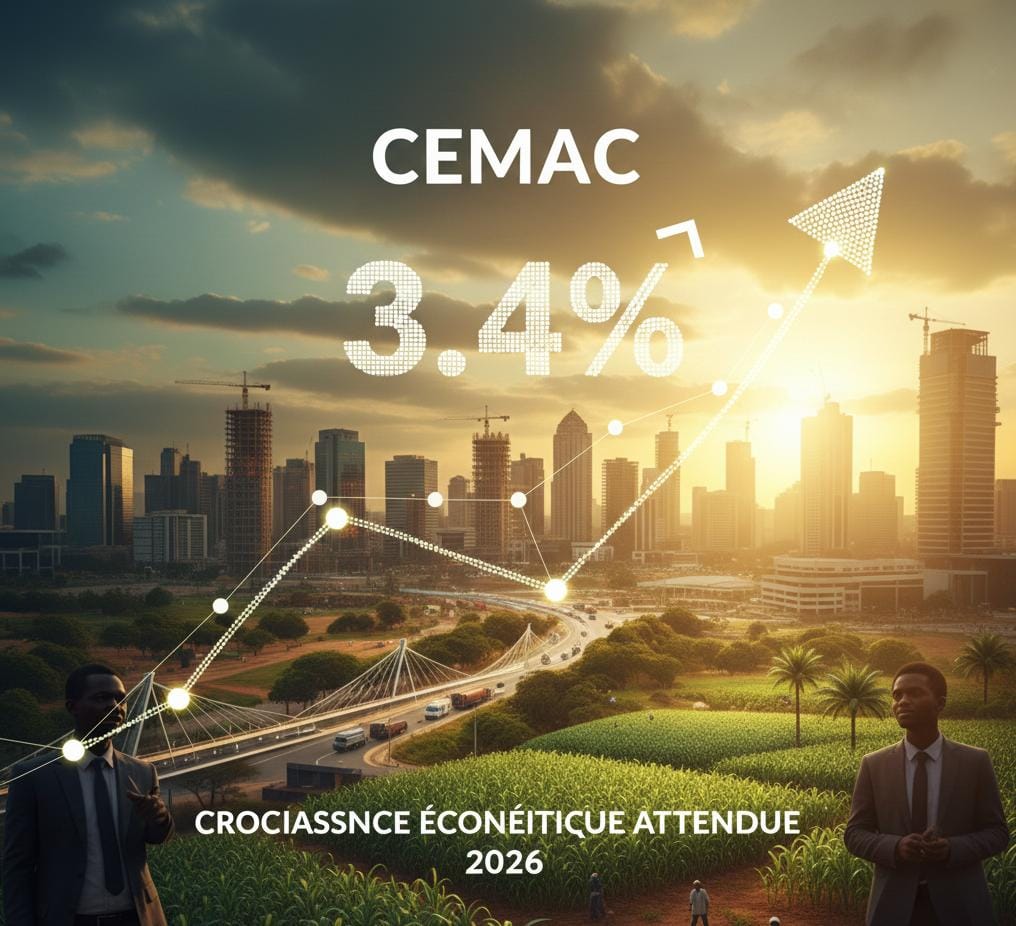
T he Commission of the Economic and Monetary Community of Central Africa (CEMAC) has announced a forecast of regional economic growth at 3.4% in 2026, up from the 2.7% expected for 2025. This trajectory, welcome in a global context marked by geopolitical uncertainty and climate shocks, rests on two solid pillars: revitalized agriculture and a boom in public works. Beyond the figures, this dynamic reflects the early successes of diversification strategies, long called for to break dependence on hydrocarbons.

Agriculture, traditionally the poor relation of CEMAC economies, is showing encouraging signs. With productivity rising moderately by 2% to 4% per year—though uneven across countries and levels of investment—the sector is benefiting from import-substitution and modernization efforts. In Cameroon and Gabon, for example, mechanization and irrigation programs have boosted cereal yields, while in the Central African Republic and Chad, anti-deforestation initiatives are supporting resilient production. These advances are far from insignificant: in a region where agriculture employs more than 60% of the workforce, stable growth in this sector could reduce income volatility and mitigate exogenous shocks such as recurrent droughts.
Public works, meanwhile, act as a powerful accelerator. Massive investments in energy infrastructure—hydroelectric dams in Cameroon, solar networks in Congo—and in road construction are stimulating not only immediate activity but also long-term competitiveness. According to estimates by the Bank of Central African States (BEAC), these projects could contribute 1.2 percentage points to 2026 growth, through multiplier effects on employment and local consumption. This is the very essence of diversification policies: transforming oil rents into sustainable productive assets, aligned with the African Union’s Agenda 2063.
Yet optimism must remain measured. CEMAC faces headwinds: rising public debt (around 50% of GDP on average), persistent inflation despite the CFA franc, and continued dependence on fossil fuel exports (over 70% of export revenues). Without ambitious fiscal reforms and deeper regional integration—such as customs harmonization—this growth may remain fragile. CEMAC’s projections count on a rebound in foreign investment, but this presupposes stronger governance and political stability, two crucial challenges for post-transition Chad and a transforming Equatorial Guinea.
In sum, 3.4% growth in 2026 is not a utopia, but the result of a pragmatic strategy. If member states stay the course on diversification, CEMAC could emerge as an island of resilience in Sub-Saharan Africa. Economists like myself see this as a strong signal: Central Africa is no longer condemned to the resource curse; it is forging its own path toward inclusive prosperity.