



Total failure of Gabonese candidates at CAMES
The failure of Gabon's higher education system in the face of African intelligence.
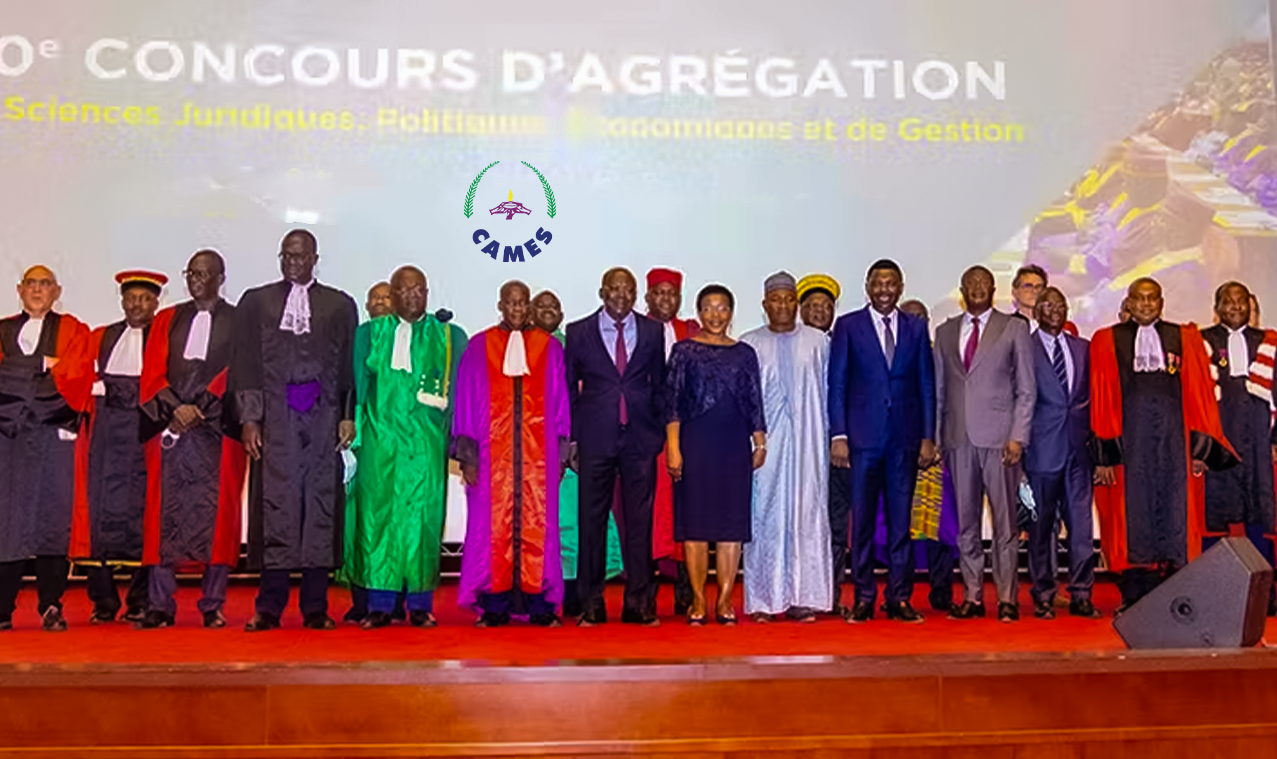
T he results of the latest Aggregation competition place Gabon in last position: a glaring failure of the Gabonese higher education system.

The recent results of the Aggregation competition revealed an overwhelming truth: none of the Gabonese candidates managed to pass the decisive practical work test. This collective debacle is not a mere accident, but the revealing symptom of a deep crisis in the Gabonese education system, and more specifically, in higher education.
A total failure on the national level All Gabonese candidates were deferred as early as the practical work test, which places them in last position compared to the other participating African countries. This symptomatic fact demonstrates the extent of the delay accumulated by our country in training competent academic executives, capable of competing on the international stage.
Deep roots in systemic failure 1. Lack of adequate and continuous funding Higher education suffers from chronic underfunding. Universities lack the resources to ensure quality education, both in terms of infrastructure and material and human resources (textbooks, laboratories, libraries).
2. Lack of adapted and updated training Curricula do not evolve according to the contemporary needs of disciplines and the market. The obsolescence of the knowledge taught prevents students from developing crucial practical skills, especially those evaluated during demanding competitions such as the Aggregation. 3. Deficiencies in teacher training The trainers themselves do not benefit from sufficient continuous training. Poorly prepared to transmit updated knowledge and develop innovative teaching methods, they struggle to motivate and guide candidates toward success.
4. Weakness in supervision and pedagogical follow-up Individualized supervision and rigorous follow-up of students are almost absent. Pedagogy too often relies on formal and theoretical learning, without practical application. This proves fatal during tests that require methodological rigor and mastery of complex practical work. **Disastrous Consequences for National Development** The failure in the Aggregation competition is not just a bad score. It reflects the inability to train an academic elite capable of strengthening the quality of secondary and higher education in our country. Without qualified teachers, the chain of knowledge transmission breaks, limiting the chances of emergence of a truly competitive and innovative society.

Emergencies and avenues for recovery - Immediate and rigorous reform of university training programs, aligned with international standards. - Substantial investments in pedagogical infrastructure, equipment, and libraries. - Establishment of a national system for continuous training and support for teachers and trainers. - Strengthening quality control in higher education institutions. - Creation of international partnerships to promote academic mobility and the exchange of best practices.
The zero score of the Gabonese candidates in the practical work test during the Aggregation competition sounds like an alarm bell regarding the urgency of globally rethinking our educational system. Without a firm political decision, massive commitment from educational stakeholders, and sustained investment, Gabon will indefinitely lag behind progress, condemned to academic and intellectual mediocrity. Time is running out. The future of our country now depends on our collective ability to emerge from this deadlock.