



Governmental Seminar: Progress Review on the Implementation of the 5 Strategic Funds Announced by the Government.
Strategic Funds Put to the Test of Reality. Between Sectoral Progress and Structural Constraints, the State Faces the Challenge of Operationalization.
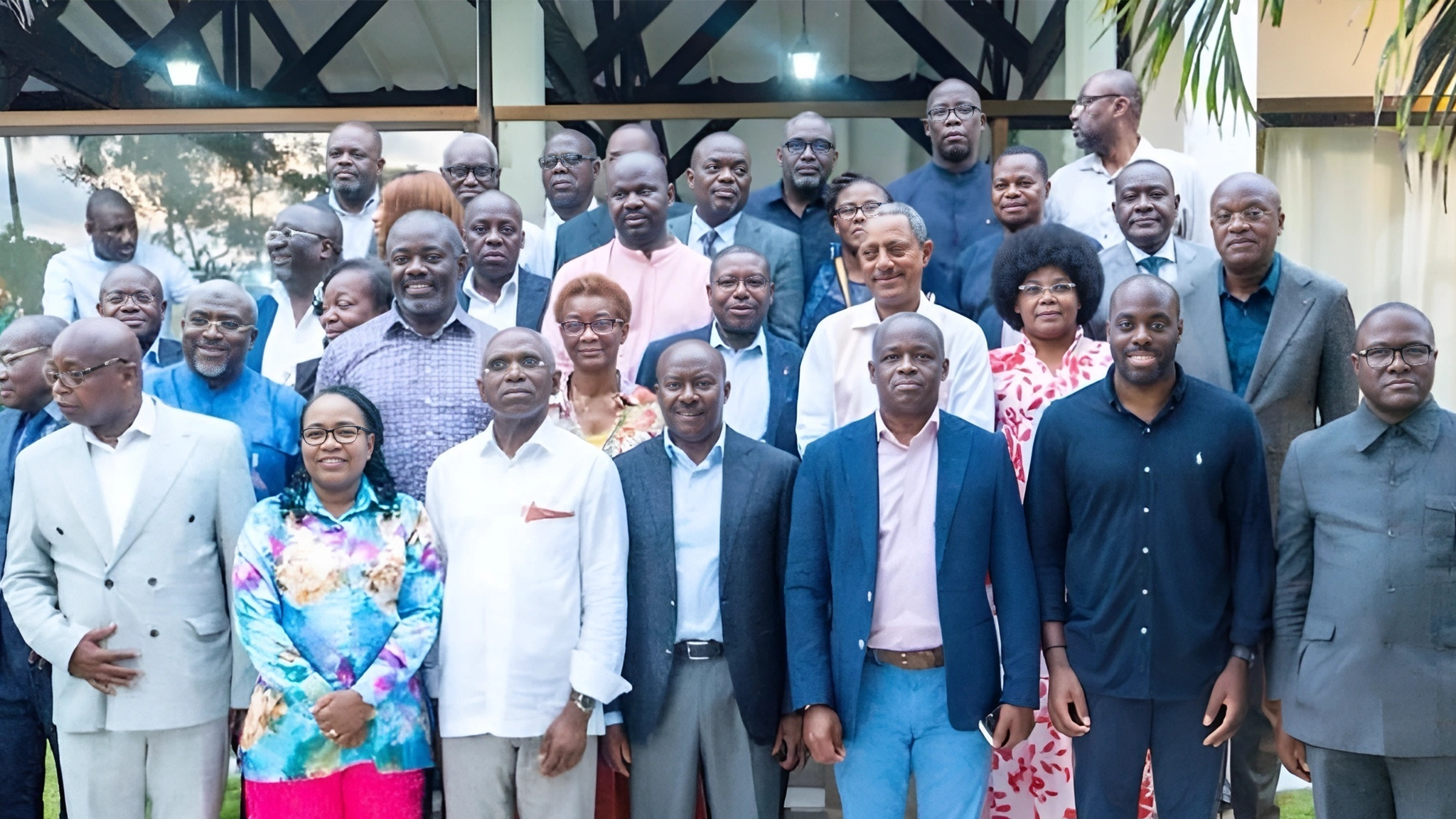
M eeting for a seminar in Libreville, members of the government reviewed the progress of the five strategic funds established to support Gabon's economic and social transformation. While concrete advances have been registered in several key sectors, financial, technical, and regulatory obstacles still hinder the full implementation of these instruments intended to accelerate national development.

Libreville, December 14, 2025 (Gabon Daily News) – At a time when the Fifth Republic aims to translate its commitments into tangible results, the governmental seminar held on Sunday in Libreville served as a framework for an uncompromising evaluation of the State's five strategic funds. Presented by the Secretary General of the Government, the progress report highlights a dynamic that has been initiated but is still hampered by persistent structural constraints.
The first pillar examined, the National Energy and Water Fund (FNEE), endowed with 82 billion FCFA, positions itself as a central lever for universal access to electricity and potable water by 2030. Placed under the supervision of the Ministry of Universal Access to Water and Energy, the fund shows encouraging signs, notably the identification of five Public-Private Partnerships (PPPs) for a global amount of 15 billion FCFA, as well as the validation of a national connection plan. However, the effective mobilization of funding and insufficient technical capacities are slowing down the realization of projects on the ground.
In the agricultural sector, the Strategic Agricultural Fund (FSA), with an envelope of 15.5 billion FCFA, intends to drive a true production revolution. Stated objectives include the modernization of 50,000 hectares and the local transformation of 70% of agricultural production. While the mapping of available land is now complete, weak coordination of supply chains and difficulties for farmers in accessing financing remain major obstacles to the scaling up of the mechanism.
The Gabonese Fund for Housing and Habitation (FGHL), endowed with 12 billion FCFA and placed under the supervision of the Ministry of Housing, Urban Planning, and Land Registry, aims to construct 10,000 housing units to reduce a deficit estimated at 30%. Priority zones have been identified, and sustainable construction standards have been agreed upon. However, regulatory red tape and the scarcity of serviced land are slowing down the effective launch of construction sites.
Regarding infrastructure, the National Infrastructure Fund (FNI), under the responsibility of the Ministry of Public Works and Construction and endowed with 18 billion FCFA, aims for the opening up of the national territory, with a strategy to mobilize 40% of financing via PPPs. While priority road axes are clearly defined, insufficient coordination with the National Fund for the Development of Rural Areas and Infrastructure (FANEIR) and the deficit of national expertise in public-private partnerships constitute notable impediments.

Finally, the Strategic Fund for the Development of Fisheries and Aquaculture (FSDPA), credited with 7.5 billion FCFA and placed under the supervision of the Ministry of the Sea, Fisheries, and Blue Economy, projects an annual production of 15,000 tonnes, with an 80% local transformation rate. Significant advances are recorded, notably an estimated 60% reduction in illegal fishing thanks to a reinforced control plan, while aquaculture sites are being finalized. Nevertheless, maritime surveillance and the absence of an efficient cold chain remain crucial challenges.
At the end of this strategic review, the conclusion is clear: the foundations are laid, the ambitions are stated, but the success of the strategic funds will depend on the rapid removal of financial, regulatory, and technical constraints. This is imperative to transform these instruments into true engines of development, serving the populations and the vision upheld by the highest State authorities.