


Gabon's Central Purchasing Agency: A Possible Remedy in the Fight Against the High Cost of Living?
With the appointment of a Director General in early December, the government is counting on the Centrale d’Achat du Gabon (CEAG) (Gabon's Central Purchasing Agency) to ease the burden on vulnerable families — but the challenge remains colossal.
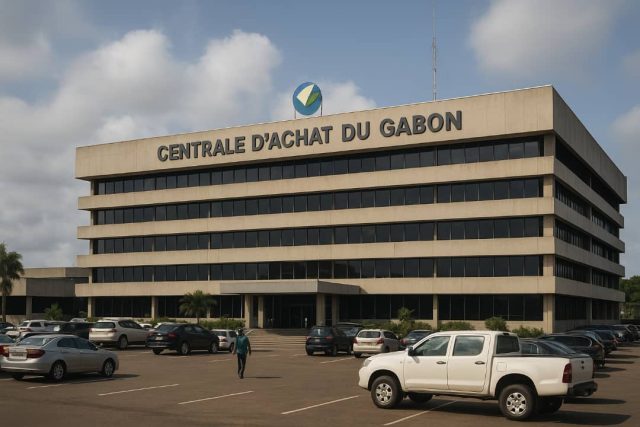
S ince the adoption of the CEAG in mid-2025, Gabon hopes to contain the inflation of foodstuffs and essential goods, which is weighing heavily on household purchasing power. The appointment of the Director General during the Council of Ministers meeting on December 4th marks the concrete launch of a structure intended to pool purchases, stabilize prices, and guarantee regular supply. For vulnerable families, the impact could be real — if the State manages to implement its commitments with transparency and efficiency.

An Unprecedented Tool in the Fight Against the High Cost of Living : Faced with rising prices and supply disruptions, the Gabonese Government decided to create the CEAG during the Council of Ministers meeting on August 12, 2025. The objective is clear: to pool purchases of essential products, negotiate directly with international suppliers, build strategic stocks, and thereby bypass the intermediaries who inflate prices. The State holds a share of the capital (37%), with the remainder belonging to private operators, which, according to authorities, guarantees both responsiveness, shared governance, and economic efficiency. The stated goals are multiple: to stabilize prices, ensure equitable distribution of essential products throughout the territory, reduce speculation — often the cause of price surges — and protect the most vulnerable population categories.
Appointment of the Director General: A Strong Signal Towards Action : It was during the Council of Ministers on December 4, 2025, that the Government approved the appointment of a Director General for the CEAG, thus taking a decisive step towards the effective implementation of this project. This appointment marks the transition from the planning stage to the operational phase: the structure now has leadership responsible for defining the supply strategy, steering purchases, negotiating contracts, and ensuring the quality of distributed products. For Gabonese families, this represents a tangible hope. If the CEAG succeeds in maintaining moderate prices, avoiding supply disruptions, and deploying homogeneous distribution — including outside of Libreville — it could significantly alleviate the cost of the basic consumer basket.
The Challenges Remain Numerous: From Promise to Reality : Despite these advances, several obstacles could limit the immediate impact of the CEAG on the daily lives of vulnerable households. Firstly, major logistical challenges must be overcome: transporting goods, storage, internal transport, equitable distribution… not to mention quality control of the products. Secondly, transparency in governance will be essential — opacity and poor practices risk undermining public trust.
Finally, it will take time for the effect to be felt in all neighborhoods, including the most remote or rural areas. For many families, the CEAG will not be enough to offset the erosion of purchasing power if other economic variables (inflation, unemployment, housing costs) are not addressed.