



Guinea-Bissau: Umaro Sissoco Embaló Victim of a Military Coup
The Military Takes Power in Guinea-Bissau, and a Transition Period Begins Under the Auspices of the Coup Leaders.
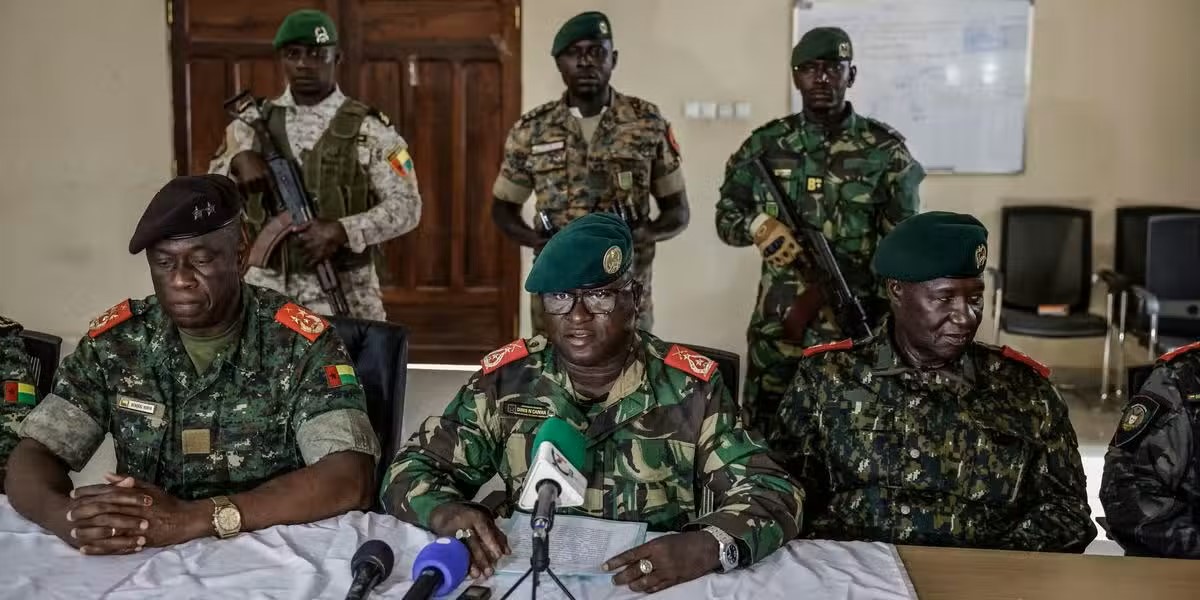
T hree days after the presidential election on November 24, which was marked by fierce contestation of the results, the political situation in Guinea-Bissau rapidly deteriorated. Umaro Sissoco Embaló, the outgoing president claiming victory with 65% of the votes according to his own count, was arrested this November 26 in his office at the presidential palace in Bissau. This arrest occurred after his main rival also declared victory, plunging the country into a deep electoral crisis.

The coup d'état was led by a dissident faction of the armed forces, who simultaneously arrested several senior security officials, including the Chief of General Staff, General Biague Na Ntan, his deputy Mamadou Touré, as well as the Minister of the Interior Botché Candé. This military operation reveals a rapid collapse of the civilian and political power structure, which was already weakened by internal divisions and persistent tensions stemming from a past marked by recurrent coups d'état.
The causes of this situation are manifold. Guinea-Bissau suffers from chronic instability, exacerbated by weak institutions, a powerful and politicized military, and a deep climate of mistrust between political actors. The opposition's refusal to recognize the election outcome catalyzed the divisions, offering a pretext for certain military personnel to intervene directly in the political process.
In the short term, this crisis increases the risk of an institutional vacuum and an escalation of violence, threatening regional stability. The international community, particularly the African Union and ECOWAS, must exert sustained pressure to establish an inclusive political dialogue. The restoration of legitimate civilian power requires rapid de-escalation and credible electoral guarantees.
In the longer term, Guinea-Bissau must urgently strengthen its democratic institutions and disarm military factions to escape the repetitive cycle of instability. Without deep structural reforms, the country remains vulnerable to coups d'état and political implosion, compromising its socio-economic development and national security